Biography
Luiz Inácio Lula da Silva
From childhood in Pernambuco to the presidency, in stages. Each sentence carries the source that supports it; anything without a verified document is left out. The programs and policies of each government are on the pages for governmentsand programs.
Origins and family
Luiz Inácio Lula da Silva was born on October 27, 1945, in Garanhuns, Pernambuco, according to the biography published by the Chamber of Deputies and the official biography published by the Planalto.[1]
In a profile published on December 30, 2002, Agência Senado records his birth in Vargem Grande, in what is now the municipality of Caetés (PE), into a family of small farmers; in a profile published on January 1, 2007, Agência Câmara records Caetés, at the time a district of Garanhuns.[2]
According to the official biography published by the Planalto, he was the seventh of the eight children of Aristides Inácio da Silva and Eurídice Ferreira de Mello, known as dona Lindu.[3]
According to the Planalto, in December 1952 his mother and the eight children migrated to São Paulo, "fleeing drought and hunger," on a 13-day journey in a pau de arara truck, and the family initially lived on the outskirts of Guarujá. Agência Senado records that he migrated to Guarujá at the age of seven.[4]
According to the Planalto, in 1956 the family moved to the city of São Paulo and came to live in a single room at the back of a bar; the Planalto places the location in the Ipiranga neighborhood and Agência Senado places it in Vila Carioca.[5]
The Chamber of Deputies records his education level as "Primary"; Agência Senado reports that he studied up to the 5th grade of elementary school.[6]
Work and training
At age 12 he got his first job, at a dry cleaner, according to the Planalto and Agência Câmara; the Planalto adds that he was also a shoeshine boy and an office boy.[7]
According to the Planalto, at age 14 he began working at Armazéns Gerais Columbia, where he had his Work Card (Carteira de Trabalho) signed for the first time.[8]
He took the lathe operator course at the National Industrial Apprenticeship Service (Senai), which lasted three years according to the Planalto; the Chamber of Deputies records his profession as metalworker.[9]
According to Agência Senado, at age 19, while employed at a metalworking plant, he suffered a workplace accident and lost the little finger of his left hand.[10]
According to the Planalto, after working at several factories he joined Indústrias Villares, in São Bernardo do Campo, in the ABC region of São Paulo, where he began to have contact with the union movement through his brother José Ferreira da Silva, known as Frei Chico.[11]
Trade unionism
In 1969 he joined the board of the Metalworkers' Union of São Bernardo do Campo and Diadema: the Chamber of Deputies records the position of director, and the Planalto and Agência Senado record his election as an alternate.[12]
In 1972 he was elected first secretary of the Metalworkers' Union of São Bernardo do Campo and Diadema, according to the Chamber of Deputies.[13]
In 1975 he was elected president of the union, according to the Chamber of Deputies; the Planalto reports that the election was with 92% of the votes and that the union represented 100 thousand workers.[14]
In 1978 he was reelected president of the union with 98% of the votes, according to Agência Câmara and Agência Senado.[15]
According to the Planalto, in March 1979, 170 thousand metalworkers stopped work in the ABC region of São Paulo under his leadership; Agência Senado records that in 1979 he led the metalworkers' strike that paralyzed the ABC region of São Paulo.[16]
According to the Planalto, in 1980 a new metalworkers' strike led to intervention by the Federal Government in the union and to the arrest of Lula and other leaders, based on the National Security Law. Agência Senado records that his leadership of the strikes led to his being arrested and prosecuted under the then National Security Law.[17]
The Chamber of Deputies biography records that, for having led the ABC strikes, he spent 31 days in jail in 1980; the Planalto and Agência Senado also record 31 days in jail.[18]
Workers' Party (PT) and CUT
On February 10, 1980, according to the Planalto, he founded the Workers' Party (PT) with other union leaders, intellectuals, politicians, rural leaders, religious figures, and representatives of social movements; the Chamber of Deputies biography also records the founding in 1980.[19]
In the list of parties registered with the TSE, the Workers' Party (PT) appears with approval on February 11, 1982 (11.2.1982) and party number 13.[20]
The Chamber of Deputies records that he chaired the PT from 1980 to 1988 and from 1990 to 1994.[21]
In 1983 he took part in the founding of the Central Única dos Trabalhadores (CUT), according to the Chamber of Deputies; the Planalto places the founding in August 1983.[22]
In 1984 he took part in the Diretas Já movement, according to Agência Senado; the Chamber of Deputies biography records him as one of the leaders of the campaign.[23]
Federal deputy in the Constituent Assembly
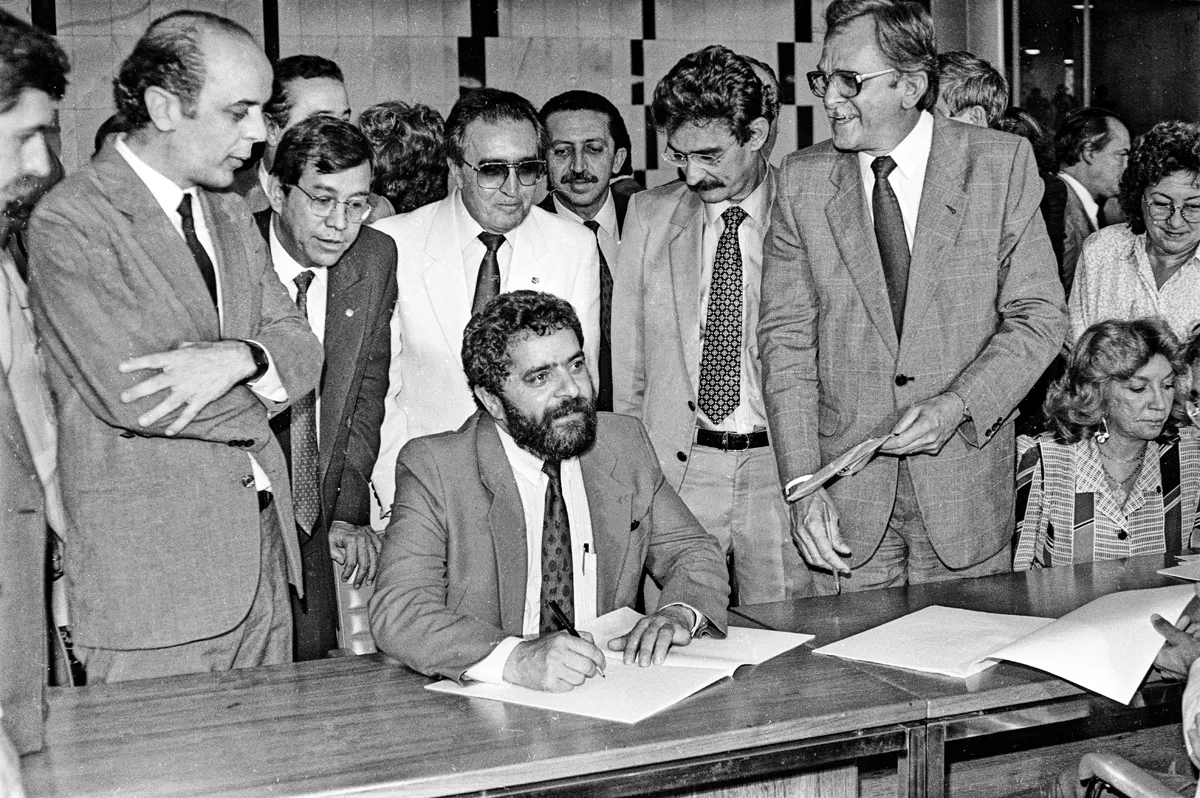

In 1986 he was elected federal deputy for São Paulo to the National Constituent Assembly; Agência Senado records that he was the most voted federal deputy in the country, with more than 650 thousand votes.[24]
He was sworn in on 02/01/1987 for the term of constituent federal deputy from 1987 to 1991, for the PT of SP, and was present at the installation session of the National Constituent Assembly on the same date, according to the Chamber of Deputies.[25]
He was leader of the PT in the Chamber of Deputies and in the National Constituent Assembly between 1987 and 1988, according to the Chamber of Deputies.[26]
In the National Constituent Assembly, he was a full member of the Systematization Committee and an alternate member of the Subcommittee on Black People, Indigenous Peoples, Persons with Disabilities, and Minorities, of the Social Order Committee, according to the Chamber of Deputies.[27]
He took leave from his term as federal deputy for 30 days starting on February 25, 1989, to attend to personal matters, according to the Chamber of Deputies.[28]
Candidacies
In 1982 he ran for governor of São Paulo for the PT, according to the Chamber of Deputies; Agência Senado records that he finished in fourth place.[29]
In the 1989 presidential election, decided in two rounds (November 15 and December 17), Luiz Inácio Lula da Silva, the PT candidate, received 46.97% of the valid votes, and Fernando Collor de Mello (PRN) was elected with 53.03%, according to the TSE.[30]
In 1994 he was defeated in the first round by Fernando Henrique Cardoso, according to Agência Senado; the TSE records 34,377,829 votes for Fernando Henrique Cardoso that year.[31]
In 1998 he ran for president for the PT, with number 13, according to the TSE list of candidates. According to Agência Senado, he was defeated in the first round by Fernando Henrique Cardoso, as in 1994; the TSE records 35,936,916 votes for Fernando Henrique Cardoso in 1998, the year he was reelected.[32]
In 2002 he was elected President of the Republic with 52,793,364 votes, according to the TSE; the Planalto records the date as October 27, 2002 and Senator José Alencar, of the PL of Minas Gerais, as the vice-presidential candidate on the ticket.[33]
In 2006 he was reelected with 58,295,042 votes, according to the TSE. According to Agência Senado, the reelection took place on October 29, in the second round, and his opponent was Geraldo Alckmin.[34]
The TSE Plenary rejected, by 6 votes to 1, Lula's registration as a candidate for the Presidency of the Republic, following the rapporteur, Justice Luís Roberto Barroso, who declared him ineligible under the Clean Record Law (Complementary Law No. 135/2010), on account of the conviction by the 8th Panel of the TRF4; the court also prohibited campaign acts and allowed the candidate to be replaced.[35]
The TSE unanimously approved the registration of Lula (PT) as the candidate for President of the Republic of the Brasil da Esperança coalition in the 2022 Elections, with Geraldo Alckmin as vice president.[36]
In the second round of the 2022 General Elections, with all polling sections tallied, Lula, of the Brasil da Esperança Coalition, obtained 60,345,999 votes (50.90% of the valid votes), and Jair Bolsonaro received 58,206,354 votes (49.10%), according to the TSE.[37]
On December 12, 2022, the president of the TSE, Justice Alexandre de Moraes, handed Luiz Inácio Lula da Silva and Geraldo Alckmin the diplomas of president and vice president of the Republic, elected on October 30, in the second round, for the 2023 to 2026 term.[38]
Presidency (institutional milestones)
.jpg)
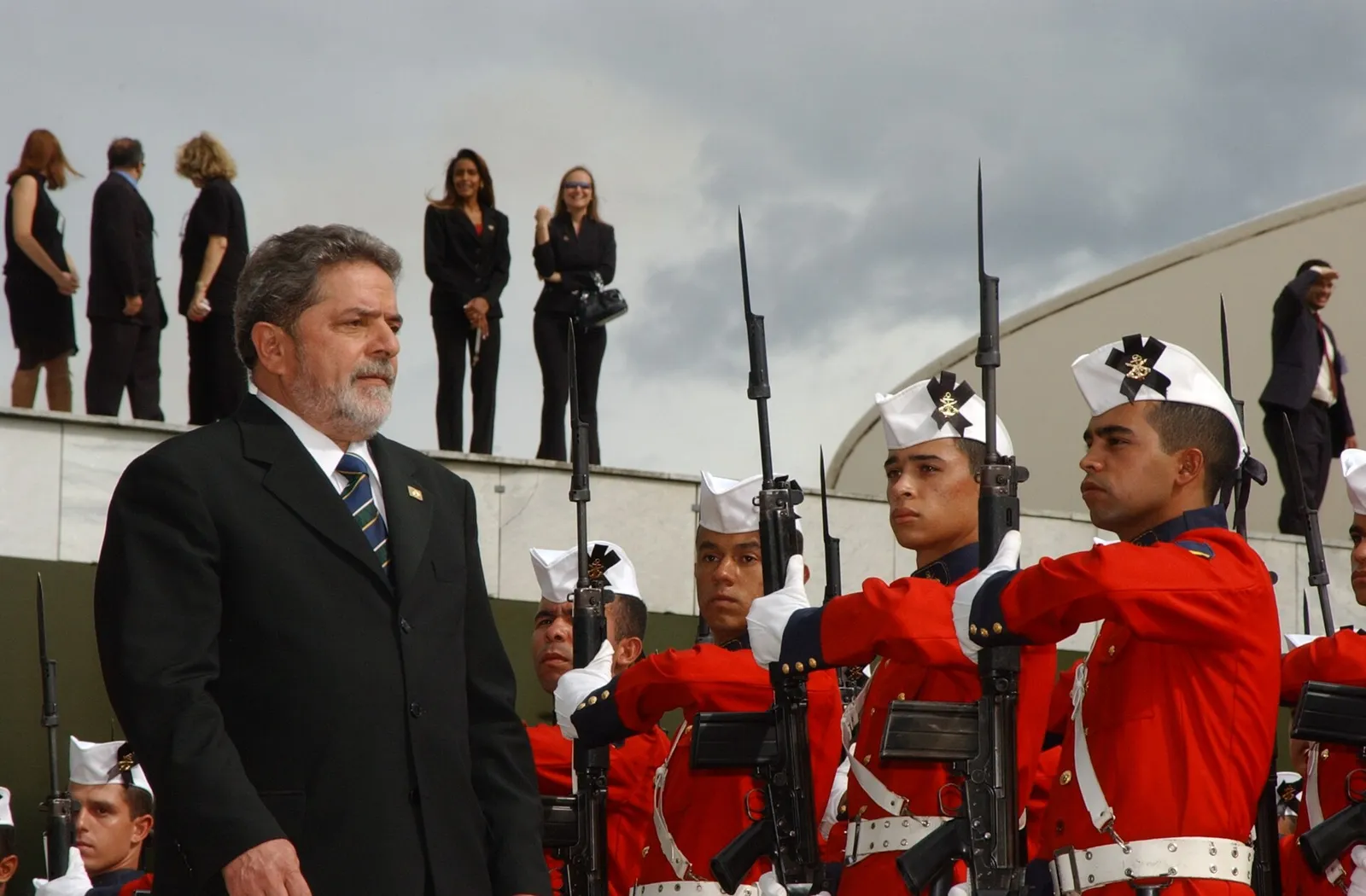
At the 2003 inauguration, Lula was sworn in at the Congress and signed the oath of office document in the plenary of the Chamber, according to the Jornal da Câmara; he then received the presidential sash from Fernando Henrique Cardoso on the Parlatório of the Planalto Palace, at 17:05, according to Agência Senado (news item of 01/01/2003).[39]
On January 1, 2007 he was sworn in for the second time, sworn in by the president of the National Congress, Renan Calheiros, in a solemn session in the Plenary of the Chamber, for the term from January 1, 2007 to December 31, 2010, according to Agência Senado.[40]
He held the Presidency of the Republic between January 1, 2003 and January 1, 2011, when he handed the office over to his successor, according to Agência Senado and the Planalto; the Chamber of Deputies records the external terms as president of the Republic for the PT from 2003 to 2011 and from 2023 onward.[41]
On January 1, 2023, the National Congress swore in Luiz Inácio Lula da Silva, in a ceremony in the Plenary of the Chamber of Deputies, in which Vice President Geraldo Alckmin was also sworn in; Agência Senado describes him as the 39th president of Brazil and the first head of the federal Executive to win three victories in direct elections.[42]
According to the Planalto, on January 1, 2023 Lula went up the ramp of the Planalto Palace alongside representatives of the diversity of the Brazilian people and received the presidential sash from the recyclable materials collector Aline Sousa.[43]
Between terms (2011 to 2022)
According to the Planalto, in 2011 he devoted himself to organizing the Instituto Lula and began giving lectures about his experiences as president; Agência Brasil records that the Instituto Lula was formerly known as Instituto Cidadania.[44]
In October 2011 he received, at the Hospital Sírio-Libanês in São Paulo, a diagnosis of laryngeal cancer, according to Agência Brasil, based on information from an aide at the Instituto Lula; the Planalto reports that, in February 2012, the doctors announced that the tumor had been eliminated.[45]
On February 3, 2017, Marisa Letícia Lula da Silva died; Lula had married her in 1974, according to the Planalto.[46]
In a sentence issued on July 12, 2017, federal judge Sérgio Moro convicted Lula in the first instance in the criminal case on the triplex apartment in Guarujá, according to the TRF4; the penalty set in the sentence was nine years and six months.[47]
On January 24, 2018, the 8th Panel of the Federal Regional Court of the 4th Region (TRF4) unanimously upheld Lula's conviction for passive corruption and money laundering in the triplex case and increased the penalty from nine years and six months to 12 years and one month of imprisonment in a closed regime, with 280 day-fines.[48]
The Plenary of the Supreme Federal Court (STF) denied, by majority, Habeas Corpus 152752, through which the defense sought to prevent the provisional execution of the sentence after the TRF4 upheld the conviction; the vote of the rapporteur, Justice Edson Fachin, prevailed, finding no illegality in the STJ decision that applied the STF case law in force at the time.[49]
On April 5, the TRF4 issued an official letter ordering the execution of Lula's sentence, on the grounds that the appeal stage was exhausted because motions for infringing appeal (embargos infringentes) are not allowed against a unanimous ruling.[50]
From April 7, 2018, Lula was held at the Federal Police Superintendency in Curitiba, for the conviction in the Guarujá triplex case, according to Agência Brasil, the STJ, and the Planalto.[51]
On November 7, 2019, the STF Plenary concluded the judgment of Declaratory Actions of Constitutionality (ADC) 43, 44, and 54 and decided, by majority, that the rule of the Code of Criminal Procedure (CPP) providing for the exhaustion of all possibilities of appeal (res judicata of the conviction) before the start of serving the sentence is constitutional.[52]
According to Agência Brasil, judge Danilo Pereira Júnior, of the Federal Court in Curitiba, ordered Lula's release following a request by the defense based on the STF decision of the previous day, and Lula left the Federal Police holding facility in Curitiba the same day; the Planalto records the release on November 8, 2019, and Agência Brasil records 580 days in prison.[53]
In the Sítio de Atibaia case, the sentence of the 13th Federal Court of Curitiba, issued by federal judge Gabriela Hardt, sentenced Lula to 12 years and 11 months of imprisonment; on November 27, 2019, the 8th Panel of the TRF4 unanimously upheld the conviction and raised the penalty to 17 years, 1 month, and 10 days, according to the TRF4. On June 24, 2021, STF Justice Gilmar Mendes annulled all procedural and pre-procedural decision-making acts in this criminal case, according to the STF.[54]
Fachin's decision in HC 193726 annulled the decisions in four cases: the Guarujá triplex, the Sítio de Atibaia, the Instituto Lula headquarters, and donations to the Instituto Lula; the justice also declared 10 habeas corpus petitions and four complaints (reclamações) filed by the defense moot, among them the one challenging the bias of former judge Sergio Moro.[55]
On March 23, after Fachin's decision, the Second Panel of the STF, by majority, granted HC 164493 and recognized the bias of former judge Sérgio Moro in the Guarujá triplex criminal case, ordering the annulment of all his decisions in that case, including those of the pre-procedural phase.[56]
On June 23, 2021, the STF Plenary, by seven votes to four, upheld the Second Panel decision that declared former judge Sergio Moro biased in the Guarujá triplex criminal case, so that the annulment of all his decisions in that case stood.[57]
On June 24, 2021, STF Justice Gilmar Mendes extended the declaration of Sergio Moro's bias to the criminal cases concerning the Sítio de Atibaia and the Instituto Lula properties, annulling the procedural and pre-procedural decision-making acts in those cases.[58]
With the annulment of the convictions, Lula regained his political rights; the Planalto places this milestone in March 2021, and Agência Senado places it in April 2021.[59]
Sources and evidence
Excerpts are quoted in the original language of the source.
1. Luiz Inácio Lula da Silva was born on October 27, 1945, in Garanhuns, Pernambuco, according to the biography published by the Chamber of Deputies and the official biography published by the Planalto.
- LUIZ INÁCIO LULA DA SILVA Deputado Federal na Legislatura 1987-1991 (biografia, série 25 anos da Constituição de 1988) · Chamber of Deputies Official record
Where: page 1, paragraph 1. Accessed October 14, 2026.“Nasceu em 27 de outubro de 1945, em Garanhuns, Pernambuco.”
- Biografia do Presidente da República · Presidency of the Republic (Planalto Palace) Government communication
Where: paragraph 1. Accessed October 14, 2026.“Luiz Inácio Lula da Silva nasceu em 27 de outubro de 1945 na cidade de Garanhuns, interior de Pernambuco.”
- LUIZ INÁCIO LULA DA SILVA Deputado Federal na Legislatura 1987-1991 (biografia, série 25 anos da Constituição de 1988) · Chamber of Deputies Official record
2. In a profile published on December 30, 2002, Agência Senado records his birth in Vargem Grande, in what is now the municipality of Caetés (PE), into a family of small farmers; in a profile published on January 1, 2007, Agência Câmara records Caetés, at the time a district of Garanhuns.
- Do agreste ao Planalto Central - a trajetória do novo Presidente da República · Federal Senate (Agência Senado) Government communication
Where: paragraph 1. Accessed October 14, 2026.“novo presidente da República, Luiz Inácio Lula da Silva, nasceu há 57 anos, em Vargem Grande, localizada no atual município de Caetés (PE), numa família de pequenos lavradores.”
- Do agreste ao Planalto Central - a trajetória do novo Presidente da República · Federal Senate (Agência Senado) Government communication
Where: header (publication date). Accessed October 14, 2026.“30/12/2002, 00h00”
- Presidente reeleito tem trajetória política singular · Chamber of Deputies (Agência Câmara de Notícias) Government communication
Where: header (publication date). Accessed October 14, 2026.“01/01/2007”
- Presidente reeleito tem trajetória política singular · Chamber of Deputies (Agência Câmara de Notícias) Government communication
Where: paragraph 2. Accessed October 14, 2026.“Operário e líder sindicalista, Lula nasceu em 1945 em Caetés - na época, um distrito da cidade pernambucana de Garanhuns -, mas foi criado em São Paulo”
- Do agreste ao Planalto Central - a trajetória do novo Presidente da República · Federal Senate (Agência Senado) Government communication
3. According to the official biography published by the Planalto, he was the seventh of the eight children of Aristides Inácio da Silva and Eurídice Ferreira de Mello, known as dona Lindu.
- Biografia do Presidente da República · Presidency of the Republic (Planalto Palace) Government communication
Where: paragraph 1. Accessed October 14, 2026.“Foi o sétimo dos oito filhos de Aristides Inácio da Silva e de Eurídice Ferreira de Mello, a dona Lindu”
- Biografia do Presidente da República · Presidency of the Republic (Planalto Palace) Government communication
4. According to the Planalto, in December 1952 his mother and the eight children migrated to São Paulo, "fleeing drought and hunger," on a 13-day journey in a pau de arara truck, and the family initially lived on the outskirts of Guarujá. Agência Senado records that he migrated to Guarujá at the age of seven.
- Biografia do Presidente da República · Presidency of the Republic (Planalto Palace) Government communication
Where: paragraph 2. Accessed October 14, 2026.“Em dezembro de 1952, dona Lindu e os oito filhos migraram para São Paulo, fugindo da seca e da fome. Foram 13 dias de viagem num caminhão "pau de arara". De início, a família morou na periferia de Guarujá”
- Presidente Lula é reeleito · Federal Senate (Agência Senado) Government communication
Where: paragraph 3. Accessed October 14, 2026.“Aos sete anos de idade migrou para Guarujá, em São Paulo.”
- Biografia do Presidente da República · Presidency of the Republic (Planalto Palace) Government communication
5. According to the Planalto, in 1956 the family moved to the city of São Paulo and came to live in a single room at the back of a bar; the Planalto places the location in the Ipiranga neighborhood and Agência Senado places it in Vila Carioca.
- Biografia do Presidente da República · Presidency of the Republic (Planalto Palace) Government communication
Where: paragraph 3. Accessed October 14, 2026.“Em 1956, a família mudou-se para São Paulo, a capital, passando a morar num único cômodo, nos fundos de um bar no bairro Ipiranga.”
- Do agreste ao Planalto Central - a trajetória do novo Presidente da República · Federal Senate (Agência Senado) Government communication
Where: paragraph 2. Accessed October 14, 2026.“Na capital paulista, morou com toda a família num minúsculo quarto nos fundos de um bar, na Vila Carioca.”
- Biografia do Presidente da República · Presidency of the Republic (Planalto Palace) Government communication
6. The Chamber of Deputies records his education level as "Primary"; Agência Senado reports that he studied up to the 5th grade of elementary school.
- Biografia do(a) Deputado(a) Federal LUIZ INÁCIO LULA DA SILVA · Chamber of Deputies Official record
Where: Biography, Education field. Accessed October 14, 2026.“Profissões: Metalúrgico Escolaridade: Primário”
- Do agreste ao Planalto Central - a trajetória do novo Presidente da República · Federal Senate (Agência Senado) Government communication
Where: paragraph 2. Accessed October 14, 2026.“Estudou até à 5ª série do ensino fundamental”
- Biografia do(a) Deputado(a) Federal LUIZ INÁCIO LULA DA SILVA · Chamber of Deputies Official record
7. At age 12 he got his first job, at a dry cleaner, according to the Planalto and Agência Câmara; the Planalto adds that he was also a shoeshine boy and an office boy.
- Biografia do Presidente da República · Presidency of the Republic (Planalto Palace) Government communication
Where: paragraph 3. Accessed October 14, 2026.“Aos 12 anos de idade, Lula conseguiu seu primeiro emprego, numa tinturaria. Também foi engraxate e office-boy.”
- Presidente reeleito tem trajetória política singular · Chamber of Deputies (Agência Câmara de Notícias) Government communication
Where: paragraph 2. Accessed October 14, 2026.“Aos 12 anos, conseguiu o primeiro emprego em uma tinturaria”
- Biografia do Presidente da República · Presidency of the Republic (Planalto Palace) Government communication
8. According to the Planalto, at age 14 he began working at Armazéns Gerais Columbia, where he had his Work Card (Carteira de Trabalho) signed for the first time.
- Biografia do Presidente da República · Presidency of the Republic (Planalto Palace) Government communication
Where: paragraph 4. Accessed October 14, 2026.“Com 14, começou a trabalhar nos Armazéns Gerais Columbia, onde teve a Carteira de Trabalho assinada pela primeira vez.”
- Biografia do Presidente da República · Presidency of the Republic (Planalto Palace) Government communication
9. He took the lathe operator course at the National Industrial Apprenticeship Service (Senai), which lasted three years according to the Planalto; the Chamber of Deputies records his profession as metalworker.
- Biografia do(a) Deputado(a) Federal LUIZ INÁCIO LULA DA SILVA · Chamber of Deputies Official record
Where: Biography, Studies and Miscellaneous Courses. Accessed October 14, 2026.“Curso de Formação de Torneiro Mecânico, Serviço Nacional de Aprendizagem Industrial (SENAI)”
- Biografia do Presidente da República · Presidency of the Republic (Planalto Palace) Government communication
Where: paragraph 4. Accessed October 14, 2026.“obteve uma vaga no curso de torneiro mecânico do Serviço Nacional de Aprendizagem Industrial (Senai). O curso durou três anos, e Lula tornou-se metalúrgico.”
- Biografia do(a) Deputado(a) Federal LUIZ INÁCIO LULA DA SILVA · Chamber of Deputies Official record
Where: Biography, Professions field. Accessed October 14, 2026.“Profissões: Metalúrgico”
- Biografia do(a) Deputado(a) Federal LUIZ INÁCIO LULA DA SILVA · Chamber of Deputies Official record
10. According to Agência Senado, at age 19, while employed at a metalworking plant, he suffered a workplace accident and lost the little finger of his left hand.
- Do agreste ao Planalto Central - a trajetória do novo Presidente da República · Federal Senate (Agência Senado) Government communication
Where: paragraph 2. Accessed October 14, 2026.“aos 19, empregado em uma metalúrgica, sofreu um acidente de trabalho, perdendo o dedo mínimo da mão esquerda.”
- Do agreste ao Planalto Central - a trajetória do novo Presidente da República · Federal Senate (Agência Senado) Government communication
11. According to the Planalto, after working at several factories he joined Indústrias Villares, in São Bernardo do Campo, in the ABC region of São Paulo, where he began to have contact with the union movement through his brother José Ferreira da Silva, known as Frei Chico.
- Biografia do Presidente da República · Presidency of the Republic (Planalto Palace) Government communication
Where: paragraph 6. Accessed October 14, 2026.“A crise após o golpe militar de 1964 levou Lula a mudar de emprego, passando por várias fábricas até ingressar nas Indústrias Villares, uma das principais metalúrgicas do país, localizada em São Bernardo do Campo, no ABC paulista.”
- Biografia do Presidente da República · Presidency of the Republic (Planalto Palace) Government communication
Where: paragraph 6. Accessed October 14, 2026.“Trabalhando na Villares, começou a ter contato com o movimento sindical por meio de seu irmão José Ferreira da Silva, mais conhecido por Frei Chico.”
- Biografia do Presidente da República · Presidency of the Republic (Planalto Palace) Government communication
12. In 1969 he joined the board of the Metalworkers' Union of São Bernardo do Campo and Diadema: the Chamber of Deputies records the position of director, and the Planalto and Agência Senado record his election as an alternate.
- Biografia do(a) Deputado(a) Federal LUIZ INÁCIO LULA DA SILVA · Chamber of Deputies Official record
Where: Biography, Union Activities. Accessed October 14, 2026.“Diretor, Sindicato dos Trabalhadores da Indústria Metalúrgica, Mecânica e de Material Elétrico, São Bernardo do Campo e Diadema, São Bernardo do Campo, SP, 1969”
- Biografia do Presidente da República · Presidency of the Republic (Planalto Palace) Government communication
Where: paragraph 7. Accessed October 14, 2026.“Em 1969, o Sindicato dos Metalúrgicos de São Bernardo do Campo e Diadema fez eleição para escolher uma nova diretoria e Lula foi eleito suplente.”
- Presidente Lula é reeleito · Federal Senate (Agência Senado) Government communication
Where: paragraph 3. Accessed October 14, 2026.“Em 1969, quando era operário das Indústrias Villares, começou a participar do movimento sindical, ao ser eleito suplente na chapa da nova diretoria do Sindicato dos Metalúrgicos de São Bernardo do Campo e Diadema.”
- Biografia do(a) Deputado(a) Federal LUIZ INÁCIO LULA DA SILVA · Chamber of Deputies Official record
13. In 1972 he was elected first secretary of the Metalworkers' Union of São Bernardo do Campo and Diadema, according to the Chamber of Deputies.
- LUIZ INÁCIO LULA DA SILVA Deputado Federal na Legislatura 1987-1991 (biografia, série 25 anos da Constituição de 1988) · Chamber of Deputies Official record
Where: page 1. Accessed October 14, 2026.“em 1972, foi eleito Primeiro-Secretário do Sindicato dos Metalúrgicos de São Bernardo do Campo e Diadema, no ABC paulista.”
- Biografia do(a) Deputado(a) Federal LUIZ INÁCIO LULA DA SILVA · Chamber of Deputies Official record
Where: Biography, Union Activities. Accessed October 14, 2026.“Primeiro-Secretário, Sindicato dos Trabalhadores da Indústria Metalúrgica, Mecânica e de Material Elétrico, São Bernardo do Campo e Diadema, São Bernardo do Campo, SP, 1972”
- LUIZ INÁCIO LULA DA SILVA Deputado Federal na Legislatura 1987-1991 (biografia, série 25 anos da Constituição de 1988) · Chamber of Deputies Official record
14. In 1975 he was elected president of the union, according to the Chamber of Deputies; the Planalto reports that the election was with 92% of the votes and that the union represented 100 thousand workers.
- LUIZ INÁCIO LULA DA SILVA Deputado Federal na Legislatura 1987-1991 (biografia, série 25 anos da Constituição de 1988) · Chamber of Deputies Official record
Where: page 1. Accessed October 14, 2026.“Em 1975, elegeu-se Presidente do sindicato”
- Biografia do Presidente da República · Presidency of the Republic (Planalto Palace) Government communication
Where: paragraph 7. Accessed October 14, 2026.“Em 1975, foi eleito presidente do sindicato com 92% dos votos, passando a representar 100 mil trabalhadores.”
- LUIZ INÁCIO LULA DA SILVA Deputado Federal na Legislatura 1987-1991 (biografia, série 25 anos da Constituição de 1988) · Chamber of Deputies Official record
15. In 1978 he was reelected president of the union with 98% of the votes, according to Agência Câmara and Agência Senado.
- Presidente reeleito tem trajetória política singular · Chamber of Deputies (Agência Câmara de Notícias) Government communication
Where: paragraph 6. Accessed October 14, 2026.“Em 1978, foi reeleito para a presidência do sindicato com 98% dos votos.”
- Do agreste ao Planalto Central - a trajetória do novo Presidente da República · Federal Senate (Agência Senado) Government communication
Where: paragraph 3. Accessed October 14, 2026.“cargo para o qual foi reeleito em 1978, com 98% dos votos.”
- Presidente reeleito tem trajetória política singular · Chamber of Deputies (Agência Câmara de Notícias) Government communication
16. According to the Planalto, in March 1979, 170 thousand metalworkers stopped work in the ABC region of São Paulo under his leadership; Agência Senado records that in 1979 he led the metalworkers' strike that paralyzed the ABC region of São Paulo.
- Biografia do Presidente da República · Presidency of the Republic (Planalto Palace) Government communication
Where: paragraph 8. Accessed October 14, 2026.“Em março de 1979, 170 mil metalúrgicos pararam o ABC paulista, sob sua liderança.”
- Presidente Lula é reeleito · Federal Senate (Agência Senado) Government communication
Where: paragraph 3. Accessed October 14, 2026.“em 1979 comandou a grande greve de metalúrgicos que paralisou o ABC Paulista.”
- Biografia do Presidente da República · Presidency of the Republic (Planalto Palace) Government communication
17. According to the Planalto, in 1980 a new metalworkers' strike led to intervention by the Federal Government in the union and to the arrest of Lula and other leaders, based on the National Security Law. Agência Senado records that his leadership of the strikes led to his being arrested and prosecuted under the then National Security Law.
- Biografia do Presidente da República · Presidency of the Republic (Planalto Palace) Government communication
Where: paragraph 10. Accessed October 14, 2026.“Em 1980, nova greve dos metalúrgicos provocou a intervenção do Governo Federal no sindicato e a prisão de Lula e outros dirigentes, com base na Lei de Segurança Nacional.”
- Do agreste ao Planalto Central - a trajetória do novo Presidente da República · Federal Senate (Agência Senado) Government communication
Where: paragraph 4. Accessed October 14, 2026.“a condução de movimentos grevistas entre 1978 e 1981 na região do ABC paulista - que o levaram, inclusive, a ser preso e processado com base na então Lei de Segurança Nacional -”
- Biografia do Presidente da República · Presidency of the Republic (Planalto Palace) Government communication
18. The Chamber of Deputies biography records that, for having led the ABC strikes, he spent 31 days in jail in 1980; the Planalto and Agência Senado also record 31 days in jail.
- LUIZ INÁCIO LULA DA SILVA Deputado Federal na Legislatura 1987-1991 (biografia, série 25 anos da Constituição de 1988) · Chamber of Deputies Official record
Where: page 1. Accessed October 14, 2026.“Por esse motivo, passou 31 dias preso em 1980.”
- Biografia do Presidente da República · Presidency of the Republic (Planalto Palace) Government communication
Where: paragraph 10. Accessed October 14, 2026.“Sua primeira prisão política durou 31 dias.”
- Presidente Lula é reeleito · Federal Senate (Agência Senado) Government communication
Where: paragraph 3. Accessed October 14, 2026.“Em razão das paralisações, que continuaram no ano seguinte, Lula chegou a ficar 31 dias preso.”
- LUIZ INÁCIO LULA DA SILVA Deputado Federal na Legislatura 1987-1991 (biografia, série 25 anos da Constituição de 1988) · Chamber of Deputies Official record
19. On February 10, 1980, according to the Planalto, he founded the Workers' Party (PT) with other union leaders, intellectuals, politicians, rural leaders, religious figures, and representatives of social movements; the Chamber of Deputies biography also records the founding in 1980.
- Biografia do Presidente da República · Presidency of the Republic (Planalto Palace) Government communication
Where: paragraph 10. Accessed October 14, 2026.“Em 10 de fevereiro de 1980, ele fundou o PT, juntamente com outros sindicalistas, intelectuais, políticos, lideranças rurais, religiosos e representantes de movimentos sociais.”
- LUIZ INÁCIO LULA DA SILVA Deputado Federal na Legislatura 1987-1991 (biografia, série 25 anos da Constituição de 1988) · Chamber of Deputies Official record
Where: page 1. Accessed October 14, 2026.“Por esse motivo, passou 31 dias preso em 1980. Nesse ano, fundou com outros sindicalistas, intelectuais e líderes de movimentos sociais o Partido dos Trabalhadores (PT)”
- Biografia do Presidente da República · Presidency of the Republic (Planalto Palace) Government communication
20. In the list of parties registered with the TSE, the Workers' Party (PT) appears with approval on February 11, 1982 (11.2.1982) and party number 13.
- Partidos políticos registrados no TSE · Superior Electoral Court Official record
Where: table Parties registered with the TSE, row 3. Accessed October 14, 2026.“PT PARTIDO DOS TRABALHADORES 11.2.1982 EDSON ANTONIO EDINHO DA SILVA 13”
- Partidos políticos registrados no TSE · Superior Electoral Court Official record
21. The Chamber of Deputies records that he chaired the PT from 1980 to 1988 and from 1990 to 1994.
- Biografia do(a) Deputado(a) Federal LUIZ INÁCIO LULA DA SILVA · Chamber of Deputies Official record
Where: Biography, Union Activities, Class Representation, Associations and Councils. Accessed October 14, 2026.“Presidente, Partido dos Trabalhadores, São Paulo, SP, 1980 - 1988; Presidente, Partido dos Trabalhadores, São Paulo, SP, 1990 - 1994.”
- Biografia do(a) Deputado(a) Federal LUIZ INÁCIO LULA DA SILVA · Chamber of Deputies Official record
Where: Biography, Party Activities. Accessed October 14, 2026.“Presidente, PT, desde sua fundação até 1988”
- Biografia do(a) Deputado(a) Federal LUIZ INÁCIO LULA DA SILVA · Chamber of Deputies Official record
22. In 1983 he took part in the founding of the Central Única dos Trabalhadores (CUT), according to the Chamber of Deputies; the Planalto places the founding in August 1983.
- LUIZ INÁCIO LULA DA SILVA Deputado Federal na Legislatura 1987-1991 (biografia, série 25 anos da Constituição de 1988) · Chamber of Deputies Official record
Where: page 1. Accessed October 14, 2026.“Em 1983, participou da fundação da Central Única dos Trabalhadores (CUT)”
- Biografia do Presidente da República · Presidency of the Republic (Planalto Palace) Government communication
Where: paragraph 11. Accessed October 14, 2026.“Em agosto de 1983, participou da fundação da Central Única dos Trabalhadores (CUT).”
- LUIZ INÁCIO LULA DA SILVA Deputado Federal na Legislatura 1987-1991 (biografia, série 25 anos da Constituição de 1988) · Chamber of Deputies Official record
23. In 1984 he took part in the Diretas Já movement, according to Agência Senado; the Chamber of Deputies biography records him as one of the leaders of the campaign.
- Presidente Lula é reeleito · Federal Senate (Agência Senado) Government communication
Where: paragraph 4. Accessed October 14, 2026.“Em 1984, Lula participou do movimento das Diretas-Já.”
- LUIZ INÁCIO LULA DA SILVA Deputado Federal na Legislatura 1987-1991 (biografia, série 25 anos da Constituição de 1988) · Chamber of Deputies Official record
Where: page 1. Accessed October 14, 2026.“Em 1983, participou da fundação da Central Única dos Trabalhadores (CUT) e, no ano seguinte, foi uma das lideranças da campanha das “Diretas Já”.”
- Presidente Lula é reeleito · Federal Senate (Agência Senado) Government communication
24. In 1986 he was elected federal deputy for São Paulo to the National Constituent Assembly; Agência Senado records that he was the most voted federal deputy in the country, with more than 650 thousand votes.
- Do agreste ao Planalto Central - a trajetória do novo Presidente da República · Federal Senate (Agência Senado) Government communication
Where: paragraph 5. Accessed October 14, 2026.“em 1986, foi eleito para a Assembléia Nacional Constituinte como o deputado federal mais votado do país, com mais de 650 mil votos.”
- Luiz Inácio Lula da Silva (registro de autoridade) · Chamber of Deputies (Historical Archive) Official record
Where: Description area, Places. Accessed October 14, 2026.“São Paulo - eleito Deputado Federal.”
- LUIZ INÁCIO LULA DA SILVA Deputado Federal na Legislatura 1987-1991 (biografia, série 25 anos da Constituição de 1988) · Chamber of Deputies Official record
Where: page 1. Accessed October 14, 2026.“Deputado Federal mais votado nas eleições de 1986”
- Do agreste ao Planalto Central - a trajetória do novo Presidente da República · Federal Senate (Agência Senado) Government communication
25. He was sworn in on 02/01/1987 for the term of constituent federal deputy from 1987 to 1991, for the PT of SP, and was present at the installation session of the National Constituent Assembly on the same date, according to the Chamber of Deputies.
- Biografia do(a) Deputado(a) Federal LUIZ INÁCIO LULA DA SILVA · Chamber of Deputies Official record
Where: Biography, Terms. Accessed October 14, 2026.“Deputado(a) Federal - (Constituinte), 1987-1991, SP, PT , Dt. Posse: 01/02/1987.”
- Biografia do(a) Deputado(a) Federal LUIZ INÁCIO LULA DA SILVA · Chamber of Deputies Official record
Where: Biography, Supplementary Records. Accessed October 14, 2026.“Membro titular. Presente na Sessão de Instalação em 01/02/1987 (Diário da Assembleia Nacional Constituinte, 02/02/1987, p.3, 1ª col.).”
- Biografia do(a) Deputado(a) Federal LUIZ INÁCIO LULA DA SILVA · Chamber of Deputies Official record
26. He was leader of the PT in the Chamber of Deputies and in the National Constituent Assembly between 1987 and 1988, according to the Chamber of Deputies.
- LUIZ INÁCIO LULA DA SILVA Deputado Federal na Legislatura 1987-1991 (biografia, série 25 anos da Constituição de 1988) · Chamber of Deputies Official record
Where: page 1. Accessed October 14, 2026.“atuou como Líder do PT na Câmara e na Assembléia Nacional Constituinte entre 1987 e 1988.”
- Biografia do(a) Deputado(a) Federal LUIZ INÁCIO LULA DA SILVA · Chamber of Deputies Official record
Where: Biography, Party Activities. Accessed October 14, 2026.“Líder do PT, 1987 e 1988.”
- LUIZ INÁCIO LULA DA SILVA Deputado Federal na Legislatura 1987-1991 (biografia, série 25 anos da Constituição de 1988) · Chamber of Deputies Official record
27. In the National Constituent Assembly, he was a full member of the Systematization Committee and an alternate member of the Subcommittee on Black People, Indigenous Peoples, Persons with Disabilities, and Minorities, of the Social Order Committee, according to the Chamber of Deputies.
- Biografia do(a) Deputado(a) Federal LUIZ INÁCIO LULA DA SILVA · Chamber of Deputies Official record
Where: Biography, Parliamentary Activities. Accessed October 14, 2026.“ASSEMBLÉIA NACIONAL CONSTITUINTE: Subcomissão dos Negros, Populações Indígenas, Pessoas Deficientes e Minorias, da Comissão da Ordem Social: Suplente; Comissão de Sistematização: Titular.”
- Biografia do(a) Deputado(a) Federal LUIZ INÁCIO LULA DA SILVA · Chamber of Deputies Official record
28. He took leave from his term as federal deputy for 30 days starting on February 25, 1989, to attend to personal matters, according to the Chamber of Deputies.
- Biografia do(a) Deputado(a) Federal LUIZ INÁCIO LULA DA SILVA · Chamber of Deputies Official record
Where: Biography, Leaves. Accessed October 14, 2026.“Licenciou-se do mandato de Deputado Federal, na legislatura 1987-1991, para tratar de interesses particular, pelo período de 30 dias, a partir de 25 de fevereiro de 1989.”
- Biografia do(a) Deputado(a) Federal LUIZ INÁCIO LULA DA SILVA · Chamber of Deputies Official record
29. In 1982 he ran for governor of São Paulo for the PT, according to the Chamber of Deputies; Agência Senado records that he finished in fourth place.
- LUIZ INÁCIO LULA DA SILVA Deputado Federal na Legislatura 1987-1991 (biografia, série 25 anos da Constituição de 1988) · Chamber of Deputies Official record
Where: page 1. Accessed October 14, 2026.“o Partido dos Trabalhadores (PT), pelo qual se candidatou ao Governo de São Paulo em 1982.”
- Do agreste ao Planalto Central - a trajetória do novo Presidente da República · Federal Senate (Agência Senado) Government communication
Where: paragraph 5. Accessed October 14, 2026.“Em 1982, Lula concorreu ao governo de São Paulo, ficando como quarto colocado.”
- LUIZ INÁCIO LULA DA SILVA Deputado Federal na Legislatura 1987-1991 (biografia, série 25 anos da Constituição de 1988) · Chamber of Deputies Official record
30. In the 1989 presidential election, decided in two rounds (November 15 and December 17), Luiz Inácio Lula da Silva, the PT candidate, received 46.97% of the valid votes, and Fernando Collor de Mello (PRN) was elected with 53.03%, according to the TSE.
- Brasil já registrou seis eleições em anos ímpares desde a criação da Justiça Eleitoral · Superior Electoral Court Government communication
Where: paragraph on the 1989 election. Accessed October 14, 2026.“A Eleição de 1989, a última em ano ímpar, encerrou uma série de eleições indiretas para presidente e vice-presidente da República”
- Brasil já registrou seis eleições em anos ímpares desde a criação da Justiça Eleitoral · Superior Electoral Court Government communication
Where: paragraph on the 1989 election. Accessed October 14, 2026.“Naquele pleito, o TSE registrou 22 candidatos a presidente da República e a eleição foi decidida em dois turnos, nos dias 15 de novembro e 17 de dezembro. Fernando Collor de Mello, do Partido da Reconstrução Nacional (PRN), foi escolhido presidente com 53,03% dos votos válidos, ante 46,97% de votos dados ao então candidato do Partido dos Trabalhadores (PT), Luiz Inácio Lula da Silva.”
- Brasil já registrou seis eleições em anos ímpares desde a criação da Justiça Eleitoral · Superior Electoral Court Government communication
31. In 1994 he was defeated in the first round by Fernando Henrique Cardoso, according to Agência Senado; the TSE records 34,377,829 votes for Fernando Henrique Cardoso that year.
- Do agreste ao Planalto Central - a trajetória do novo Presidente da República · Federal Senate (Agência Senado) Government communication
Where: paragraph 6. Accessed October 14, 2026.“Em 1994, disputou novamente o cargo, sendo derrotado no primeiro turno por Fernando Henrique Cardoso, o que se repetiu em 1998.”
- 90 anos da Justiça Eleitoral: 12 eleições presidenciais já foram realizadas no Brasil desde 1945 · Superior Electoral Court Government communication
Where: paragraph on 1994 and 1998. Accessed October 14, 2026.“aconteceu em 1994, quando o eleitorado voltou às urnas para escolher Fernando Henrique Cardoso como chefe do Poder Executivo. Ele angariou 34.377.829 votos em 1994 e 35.936.916 em 1998, ano em foi reeleito para o cargo.”
- Do agreste ao Planalto Central - a trajetória do novo Presidente da República · Federal Senate (Agência Senado) Government communication
32. In 1998 he ran for president for the PT, with number 13, according to the TSE list of candidates. According to Agência Senado, he was defeated in the first round by Fernando Henrique Cardoso, as in 1994; the TSE records 35,936,916 votes for Fernando Henrique Cardoso in 1998, the year he was reelected.
- Candidatos à Presidência da República (Eleições 1998) · Superior Electoral Court Official record
Where: candidates table, Lula row. Accessed October 14, 2026.“Lula Masculino PT 13”
- Do agreste ao Planalto Central - a trajetória do novo Presidente da República · Federal Senate (Agência Senado) Government communication
Where: paragraph 6. Accessed October 14, 2026.“Em 1994, disputou novamente o cargo, sendo derrotado no primeiro turno por Fernando Henrique Cardoso, o que se repetiu em 1998.”
- 90 anos da Justiça Eleitoral: 12 eleições presidenciais já foram realizadas no Brasil desde 1945 · Superior Electoral Court Government communication
Where: paragraph on 1994 and 1998. Accessed October 14, 2026.“Ele angariou 34.377.829 votos em 1994 e 35.936.916 em 1998, ano em foi reeleito para o cargo.”
- Candidatos à Presidência da República (Eleições 1998) · Superior Electoral Court Official record
33. In 2002 he was elected President of the Republic with 52,793,364 votes, according to the TSE; the Planalto records the date as October 27, 2002 and Senator José Alencar, of the PL of Minas Gerais, as the vice-presidential candidate on the ticket.
- 90 anos da Justiça Eleitoral: 12 eleições presidenciais já foram realizadas no Brasil desde 1945 · Superior Electoral Court Government communication
Where: paragraph on 2002. Accessed October 14, 2026.“Em 2002, Luiz Inácio Lula da Silva obteve 52.793.364 votos e foi o candidato escolhido para comandar o país pelos quatro anos seguintes.”
- Biografia do Presidente da República · Presidency of the Republic (Planalto Palace) Government communication
Where: paragraph on 2002. Accessed October 14, 2026.“Em 27 de outubro de 2002, aos 57 anos de idade, Luiz Inácio Lula da Silva foi pela primeira vez eleito Presidente da República Federativa do Brasil”
- Biografia do Presidente da República · Presidency of the Republic (Planalto Palace) Government communication
Where: paragraph on 2002. Accessed October 14, 2026.“O candidato a vice-presidente na chapa vitoriosa foi o empresário e senador José Alencar, do PL de Minas Gerais.”
- 90 anos da Justiça Eleitoral: 12 eleições presidenciais já foram realizadas no Brasil desde 1945 · Superior Electoral Court Government communication
34. In 2006 he was reelected with 58,295,042 votes, according to the TSE. According to Agência Senado, the reelection took place on October 29, in the second round, and his opponent was Geraldo Alckmin.
- 90 anos da Justiça Eleitoral: 12 eleições presidenciais já foram realizadas no Brasil desde 1945 · Superior Electoral Court Government communication
Where: paragraph on 2002 and 2006. Accessed October 14, 2026.“Em 2006, ele foi reeleito para o cargo com 58.295.042 votos.”
- Presidente Lula é reeleito · Federal Senate (Agência Senado) Government communication
Where: paragraph 1. Accessed October 14, 2026.“Seu adversário no segundo turno das eleições presidenciais, o tucano Geraldo Alckmin”
- Lula toma posse para exercer o segundo mandato · Federal Senate (Agência Senado) Government communication
Where: paragraph 3. Accessed October 14, 2026.“O novo mandato dos chefes do Executivo, reeleitos em 29 de outubro e diplomados em 14 de dezembro de 2006”
- 90 anos da Justiça Eleitoral: 12 eleições presidenciais já foram realizadas no Brasil desde 1945 · Superior Electoral Court Government communication
35. The TSE Plenary rejected, by 6 votes to 1, Lula's registration as a candidate for the Presidency of the Republic, following the rapporteur, Justice Luís Roberto Barroso, who declared him ineligible under the Clean Record Law (Complementary Law No. 135/2010), on account of the conviction by the 8th Panel of the TRF4; the court also prohibited campaign acts and allowed the candidate to be replaced.
- TSE indefere pedido de registro de candidatura de Lula à Presidência da República · Superior Electoral Court Government communication
Where: paragraph 1. Accessed October 14, 2026.“O Plenário do Tribunal Superior Eleitoral (TSE) indeferiu, por maioria de votos (6 a 1), o registro de candidatura do ex-presidente Luiz Inácio Lula da Silva para disputar as eleições à Presidência da República em outubro. A decisão seguiu o entendimento do relator do pedido na Corte, ministro Luís Roberto Barroso, que declarou a inelegibilidade de Lula com base na Lei da Ficha Limpa.”
- TSE indefere pedido de registro de candidatura de Lula à Presidência da República · Superior Electoral Court Government communication
Where: paragraph 2. Accessed October 14, 2026.“Também por maioria (5 a 2), o colegiado decidiu facultar à Coligação O Povo Feliz de Novo (PT/PCdo B/Pros) a substituição de seu candidato a presidente no prazo de 10 dias. Os ministros proibiram a Lula a prática de atos de campanha”
- TSE indefere pedido de registro de candidatura de Lula à Presidência da República · Superior Electoral Court Government communication
Where: paragraph on the Clean Record Law. Accessed October 14, 2026.“Em seu extenso voto, o ministro Barroso fez um histórico da Lei da Ficha Limpa (Lei Complementar nº 135/2010)”
- TSE indefere pedido de registro de candidatura de Lula à Presidência da República · Superior Electoral Court Government communication
Where: paragraph on the UN interim measure. Accessed October 14, 2026.“a suspensão da inelegibilidade decorrente da condenação de Lula pela 8ª Turma do Tribunal Regional Federal da 4ª Região (TRF-4)”
- TSE indefere pedido de registro de candidatura de Lula à Presidência da República · Superior Electoral Court Government communication
36. The TSE unanimously approved the registration of Lula (PT) as the candidate for President of the Republic of the Brasil da Esperança coalition in the 2022 Elections, with Geraldo Alckmin as vice president.
- TSE defere registro da candidatura de Lula a presidente da República · Superior Electoral Court Government communication
Where: paragraph 1. Accessed October 14, 2026.“O Tribunal Superior Eleitoral (TSE) deferiu, nesta quinta-feira (8), o registro de Luiz Inácio Lula da Silva (PT) como candidato da coligação Brasil da Esperança a presidente da República. O Plenário também aprovou o registro de Geraldo Alckmin ao cargo de vice-presidente”
- TSE defere registro da candidatura de Lula a presidente da República · Superior Electoral Court Government communication
Where: paragraph 2. Accessed October 14, 2026.“Os ministros acompanharam o voto por unanimidade.”
- TSE defere registro da candidatura de Lula a presidente da República · Superior Electoral Court Government communication
Where: paragraph 3. Accessed October 14, 2026.“não havendo contra eles nenhuma causa legal que os impeçam se de lançar candidatos nas Eleições 2022.”
- TSE defere registro da candidatura de Lula a presidente da República · Superior Electoral Court Government communication
37. In the second round of the 2022 General Elections, with all polling sections tallied, Lula, of the Brasil da Esperança Coalition, obtained 60,345,999 votes (50.90% of the valid votes), and Jair Bolsonaro received 58,206,354 votes (49.10%), according to the TSE.
- 100% das seções totalizadas: confira como ficou o quadro eleitoral após o 2º turno · Superior Electoral Court Government communication
Where: paragraph 1. Accessed October 14, 2026.“O Tribunal Superior Eleitoral (TSE) concluiu a totalização de todos os votos do segundo turno das Eleições Gerais 2022”
- 100% das seções totalizadas: confira como ficou o quadro eleitoral após o 2º turno · Superior Electoral Court Government communication
Where: paragraph on the Presidency. Accessed October 14, 2026.“Luiz Inácio Lula da Silva, da Coligação Brasil da Esperança, foi eleito pela maioria dos votos. Com a totalização da apuração de todas as seções, Lula obteve 60.345.999 votos (50,90% dos votos válidos) e Jair Bolsonaro (Coligação Pelo Bem do Brasil) recebeu 58.206.354 votos (49,10% dos votos válidos).”
- 100% das seções totalizadas: confira como ficou o quadro eleitoral após o 2º turno · Superior Electoral Court Government communication
38. On December 12, 2022, the president of the TSE, Justice Alexandre de Moraes, handed Luiz Inácio Lula da Silva and Geraldo Alckmin the diplomas of president and vice president of the Republic, elected on October 30, in the second round, for the 2023 to 2026 term.
- TSE entrega diplomas de presidente e vice-presidente da República a Lula e Alckmin · Superior Electoral Court Government communication
Where: paragraph 1. Accessed October 14, 2026.“O presidente do Tribunal Superior Eleitoral (TSE), ministro Alexandre de Moraes, entregou nesta segunda-feira (12) os diplomas de presidente e vice-presidente da República a Luiz Inácio Lula da Silva e Geraldo Alckmin, respectivamente, eleitos no dia 30 de outubro, em segundo turno, para o mandato 2023-2026.”
- TSE entrega diplomas de presidente e vice-presidente da República a Lula e Alckmin · Superior Electoral Court Government communication
Where: text of the diploma. Accessed October 14, 2026.“Brasília, 12 de dezembro de 2022, no 201º ano da Independência e 134º ano da República”
- TSE entrega diplomas de presidente e vice-presidente da República a Lula e Alckmin · Superior Electoral Court Government communication
39. At the 2003 inauguration, Lula was sworn in at the Congress and signed the oath of office document in the plenary of the Chamber, according to the Jornal da Câmara; he then received the presidential sash from Fernando Henrique Cardoso on the Parlatório of the Planalto Palace, at 17:05, according to Agência Senado (news item of 01/01/2003).
- Jornal da Câmara, Brasília, quinta-feira, 2 de janeiro de 2003, Ano 5, nº 914 · Chamber of Deputies (Jornal da Câmara) Government communication
Where: page 1. Accessed October 14, 2026.“Empossado no Congresso como o 36º presidente da história do País, Luiz Inácio Lula da Silva prometeu mudanças no modelo econômico e social”
- Jornal da Câmara, Brasília, quinta-feira, 2 de janeiro de 2003, Ano 5, nº 914 · Chamber of Deputies (Jornal da Câmara) Government communication
Where: page 1, caption. Accessed October 14, 2026.“No plenário da Câmara, o presidente assina o termo de posse”
- Transmissão da faixa ocorreu no parlatório · Federal Senate (Agência Senado) Government communication
Where: header and paragraph 1. Accessed October 14, 2026.“01/01/2003, 00h00 O presidente Luiz Inácio Lula da Silva recebeu das mãos de seu antecessor, Fernando Henrique Cardoso, a faixa presidencial no Parlatório do Palácio do Planalto às 17h05. A transmissão de cargo ocorreu após a cerimônia de posse no Congresso Nacional.”
- Jornal da Câmara, Brasília, quinta-feira, 2 de janeiro de 2003, Ano 5, nº 914 · Chamber of Deputies (Jornal da Câmara) Government communication
40. On January 1, 2007 he was sworn in for the second time, sworn in by the president of the National Congress, Renan Calheiros, in a solemn session in the Plenary of the Chamber, for the term from January 1, 2007 to December 31, 2010, according to Agência Senado.
- Lula toma posse para exercer o segundo mandato · Federal Senate (Agência Senado) Government communication
Where: paragraph 1. Accessed October 14, 2026.“presidente Luiz Inácio Lula da Silva tomou posse no cargo, pela segunda vez, nesta segunda-feira, 1 o de janeiro de 2007.”
- Lula toma posse para exercer o segundo mandato · Federal Senate (Agência Senado) Government communication
Where: paragraph 1. Accessed October 14, 2026.“Lula foi empossado pelo presidente do Congresso Nacional, Renan Calheiros, em sessão solene no Plenário da Câmara.”
- Lula toma posse para exercer o segundo mandato · Federal Senate (Agência Senado) Government communication
Where: paragraph 3. Accessed October 14, 2026.“vai de 1 o de janeiro de 2007 a 31 de dezembro de 2010.”
- Lula toma posse para exercer o segundo mandato · Federal Senate (Agência Senado) Government communication
41. He held the Presidency of the Republic between January 1, 2003 and January 1, 2011, when he handed the office over to his successor, according to Agência Senado and the Planalto; the Chamber of Deputies records the external terms as president of the Republic for the PT from 2003 to 2011 and from 2023 onward.
- Congresso empossa Lula e Alckmin na Presidência da República · Federal Senate (Agência Senado) Government communication
Where: paragraph 3. Accessed October 14, 2026.“Ele já esteve à frente do Palácio do Planalto entre 1º de janeiro de 2003 e 1º de janeiro de 2011.”
- Biografia do Presidente da República · Presidency of the Republic (Planalto Palace) Government communication
Where: paragraph on 2011. Accessed October 14, 2026.“Em 1º de janeiro de 2011, Lula transmitiu o cargo à sucessora”
- Biografia do(a) Deputado(a) Federal LUIZ INÁCIO LULA DA SILVA · Chamber of Deputies Official record
Where: Biography, External Terms. Accessed October 14, 2026.“Presidente da República, Partido: PT, Período: 2003 a 2011; Presidente da República, Partido: PT, Período: 2023.”
- Congresso empossa Lula e Alckmin na Presidência da República · Federal Senate (Agência Senado) Government communication
42. On January 1, 2023, the National Congress swore in Luiz Inácio Lula da Silva, in a ceremony in the Plenary of the Chamber of Deputies, in which Vice President Geraldo Alckmin was also sworn in; Agência Senado describes him as the 39th president of Brazil and the first head of the federal Executive to win three victories in direct elections.
- Congresso empossa Lula e Alckmin na Presidência da República · Federal Senate (Agência Senado) Government communication
Where: header and paragraph 1. Accessed October 14, 2026.“01/01/2023, 17h41 O Congresso Nacional deu posse neste domingo (1º) a Luiz Inácio Lula da Silva, 39º presidente do Brasil e primeiro governante do Executivo federal a conquistar três vitórias em eleições diretas. Na mesma solenidade, realizada no Plenário da Câmara dos Deputados, tomou posse o vice-presidente Geraldo Alckmin.”
- Congresso empossa Lula e Alckmin na Presidência da República · Federal Senate (Agência Senado) Government communication
43. According to the Planalto, on January 1, 2023 Lula went up the ramp of the Planalto Palace alongside representatives of the diversity of the Brazilian people and received the presidential sash from the recyclable materials collector Aline Sousa.
- Biografia do Presidente da República · Presidency of the Republic (Planalto Palace) Government communication
Where: last paragraph. Accessed October 14, 2026.“Em 1º de janeiro de 2023, Lula subiu a rampa do Palácio do Planalto ao lado de representantes da diversidade do povo brasileiro. E recebeu a faixa presidencial das mãos da catadora de materiais recicláveis Aline Sousa”
- Biografia do Presidente da República · Presidency of the Republic (Planalto Palace) Government communication
44. According to the Planalto, in 2011 he devoted himself to organizing the Instituto Lula and began giving lectures about his experiences as president; Agência Brasil records that the Instituto Lula was formerly known as Instituto Cidadania.
- Biografia do Presidente da República · Presidency of the Republic (Planalto Palace) Government communication
Where: paragraph on 2011. Accessed October 14, 2026.“Em 2011, o ex-presidente dedicou-se à organização do Instituto Lula. Também passou a fazer conferências sobre as experiências como presidente do Brasil.”
- Lula fez primeiros exames ontem e deve iniciar quimioterapia na próxima semana · Agência Brasil (EBC) Press
Where: paragraph 2. Accessed October 14, 2026.“As informações foram dadas por José Crispiniano, assessor do Instituto Lula, antes conhecido como Instituto Cidadania”
- Biografia do Presidente da República · Presidency of the Republic (Planalto Palace) Government communication
45. In October 2011 he received, at the Hospital Sírio-Libanês in São Paulo, a diagnosis of laryngeal cancer, according to Agência Brasil, based on information from an aide at the Instituto Lula; the Planalto reports that, in February 2012, the doctors announced that the tumor had been eliminated.
- Lula fez primeiros exames ontem e deve iniciar quimioterapia na próxima semana · Agência Brasil (EBC) Press
Where: paragraph 3. Accessed October 14, 2026.“Lula fez os primeiros exames ontem (28), no Hospital Sírio-Libanês, em São Paulo, e voltou para casa. Hoje (29), ao retornar ao hospital para complementar o procedimento, recebeu o diagnóstico de câncer na laringe.”
- Biografia do Presidente da República · Presidency of the Republic (Planalto Palace) Government communication
Where: paragraph on 2011. Accessed October 14, 2026.“Em 2011, o ex-presidente dedicou-se à organização do Instituto Lula. Também passou a fazer conferências sobre as experiências como presidente do Brasil. Mas foi diagnosticado com câncer na laringe em outubro, submetendo-se a um tratamento rigoroso no Hospital Sírio-Libanês, em São Paulo. Em fevereiro de 2012, os médicos informaram que o tumor havia sido eliminado.”
- Lula fez primeiros exames ontem e deve iniciar quimioterapia na próxima semana · Agência Brasil (EBC) Press
46. On February 3, 2017, Marisa Letícia Lula da Silva died; Lula had married her in 1974, according to the Planalto.
- Biografia do Presidente da República · Presidency of the Republic (Planalto Palace) Government communication
Where: paragraph on 2016 and 2017. Accessed October 14, 2026.“Em 3 de fevereiro de 2017, sofreu duro golpe com o falecimento da esposa Marisa Letícia Lula da Silva, mãe de quatro dos seus cinco filhos, com quem havia se casado em 1974.”
- Biografia do Presidente da República · Presidency of the Republic (Planalto Palace) Government communication
47. In a sentence issued on July 12, 2017, federal judge Sérgio Moro convicted Lula in the first instance in the criminal case on the triplex apartment in Guarujá, according to the TRF4; the penalty set in the sentence was nine years and six months.
- Operação Lava Jato: TRF4 confirma condenação do ex-presidente Luiz Inácio Lula da Silva · Federal Regional Court of the 4th Region Government communication
Where: paragraph on the rapporteur's vote. Accessed October 14, 2026.“condenados pelo juiz federal Sérgio Moro em sentença proferida em 12 de julho de 2017 por corrupção ativa e passiva e por lavagem de dinheiro”
- Operação Lava Jato: TRF4 confirma condenação do ex-presidente Luiz Inácio Lula da Silva · Federal Regional Court of the 4th Region Government communication
Where: paragraph 2. Accessed October 14, 2026.“A apelação criminal envolve o favorecimento da Construtora OAS em contratos com a Petrobras, com o pagamento de propina destinada ao Partido dos Trabalhadores e ao ex-presidente Luiz Inácio Lula da Silva, por meio de apartamento triplex do Condomínio Edifício Solaris, no Guarujá”
- Operação Lava Jato: TRF4 confirma condenação do ex-presidente Luiz Inácio Lula da Silva · Federal Regional Court of the 4th Region Government communication
Where: paragraph 1. Accessed October 14, 2026.“passando a pena de nove anos e seis meses para 12 anos e um mês de reclusão”
- Operação Lava Jato: TRF4 confirma condenação do ex-presidente Luiz Inácio Lula da Silva · Federal Regional Court of the 4th Region Government communication
48. On January 24, 2018, the 8th Panel of the Federal Regional Court of the 4th Region (TRF4) unanimously upheld Lula's conviction for passive corruption and money laundering in the triplex case and increased the penalty from nine years and six months to 12 years and one month of imprisonment in a closed regime, with 280 day-fines.
- Operação Lava Jato: TRF4 confirma condenação do ex-presidente Luiz Inácio Lula da Silva · Federal Regional Court of the 4th Region Government communication
Where: paragraph 1. Accessed October 14, 2026.“A 8ª Turma do Tribunal Regional Federal da 4ª Região (TRF4) confirmou hoje (24/1), por unanimidade, a condenação do ex-presidente Luiz Inácio Lula da Silva pelos crimes de corrupção passiva e lavagem de dinheiro, passando a pena de nove anos e seis meses para 12 anos e um mês de reclusão em regime fechado e pagamento de 280 dias-multa”
- Quinta Turma julga recurso de Lula nesta terça-feira · Superior Court of Justice Government communication
Where: paragraph 2. Accessed October 14, 2026.“O ex-presidente está preso desde abril de 2018, após ser condenado pelo Tribunal Regional Federal da 4ª Região (TRF4) no processo relativo ao tríplex do Guarujá (SP).”
- Operação Lava Jato: TRF4 confirma condenação do ex-presidente Luiz Inácio Lula da Silva · Federal Regional Court of the 4th Region Government communication
49. The Plenary of the Supreme Federal Court (STF) denied, by majority, Habeas Corpus 152752, through which the defense sought to prevent the provisional execution of the sentence after the TRF4 upheld the conviction; the vote of the rapporteur, Justice Edson Fachin, prevailed, finding no illegality in the STJ decision that applied the STF case law in force at the time.
- STF nega habeas corpus preventivo ao ex-presidente Lula · Supreme Federal Court Government communication
Where: paragraph 1. Accessed October 14, 2026.“O Plenário do Supremo Tribunal Federal (STF) negou, por maioria de votos, o Habeas Corpus (HC) 152752, por meio do qual a defesa do ex-presidente Luiz Inácio Lula da Silva buscava impedir a execução provisória da pena diante da confirmação pelo Tribunal Regional Federal da 4ª Região (TRF-4) de sua condenação pelos crimes de corrupção passiva e lavagem de dinheiro.”
- STF nega habeas corpus preventivo ao ex-presidente Lula · Supreme Federal Court Government communication
Where: paragraph 2. Accessed October 14, 2026.“A maioria dos ministros seguiu o voto do relator, ministro Edson Fachin, no sentido da ausência de ilegalidade, abusividade ou teratologia (anormalidade) na decisão do Superior Tribunal de Justiça (STJ) que aplicou ao caso a atual jurisprudência do STF”
- STF nega habeas corpus preventivo ao ex-presidente Lula · Supreme Federal Court Government communication
50. On April 5, the TRF4 issued an official letter ordering the execution of Lula's sentence, on the grounds that the appeal stage was exhausted because motions for infringing appeal (embargos infringentes) are not allowed against a unanimous ruling.
- Operação Lava Jato: TRF4 expede ofício determinando a execução da pena do ex-presidente Lula · Federal Regional Court of the 4th Region Government communication
Where: paragraph 1. Accessed October 14, 2026.“Tribunal Regional Federal da 4ª Região (TRF4) expediu às 17h31min de hoje (5/4) ofício determinando a execução da pena do ex-presidente Luiz Inácio Lula da Silva”
- Operação Lava Jato: TRF4 expede ofício determinando a execução da pena do ex-presidente Lula · Federal Regional Court of the 4th Region Government communication
Where: paragraph 3. Accessed October 14, 2026.“Diz o ofício: “Considerando o exaurimento dessa instância recursal – forte no descabimento de embargos infringentes de acórdão unânime – deve ser dado cumprimento à determinação de execução da pena, devidamente fundamentada”.”
- Operação Lava Jato: TRF4 expede ofício determinando a execução da pena do ex-presidente Lula · Federal Regional Court of the 4th Region Government communication
51. From April 7, 2018, Lula was held at the Federal Police Superintendency in Curitiba, for the conviction in the Guarujá triplex case, according to Agência Brasil, the STJ, and the Planalto.
- Após decisão do STF, juiz manda soltar ex-presidente Lula · Agência Brasil (EBC) Press
Where: paragraph 1. Accessed October 14, 2026.“que está preso desde 7 de abril do ano passado, na Superintendência da Polícia Federal (PF) em Curitiba, pela condenação no caso do triplex do Guarujá (SP)”
- Quinta Turma julga recurso de Lula nesta terça-feira · Superior Court of Justice Government communication
Where: paragraph 2. Accessed October 14, 2026.“O ex-presidente está preso desde abril de 2018”
- Biografia do Presidente da República · Presidency of the Republic (Planalto Palace) Government communication
Where: paragraph on 2018. Accessed October 14, 2026.“Em 7 de abril de 2018, com a prisão decretada por Moro”
- Após decisão do STF, juiz manda soltar ex-presidente Lula · Agência Brasil (EBC) Press
52. On November 7, 2019, the STF Plenary concluded the judgment of Declaratory Actions of Constitutionality (ADC) 43, 44, and 54 and decided, by majority, that the rule of the Code of Criminal Procedure (CPP) providing for the exhaustion of all possibilities of appeal (res judicata of the conviction) before the start of serving the sentence is constitutional.
- STF decide que cumprimento da pena deve começar após esgotamento de recursos · Supreme Federal Court Government communication
Where: header. Accessed October 14, 2026.“07/11/2019”
- STF decide que cumprimento da pena deve começar após esgotamento de recursos · Supreme Federal Court Government communication
Where: paragraph 1. Accessed October 14, 2026.“Por maioria, o Plenário do Supremo Tribunal Federal (STF) decidiu que é constitucional a regra do Código de Processo Penal (CPP) que prevê o esgotamento de todas as possibilidades de recurso (trânsito em julgado da condenação) para o início do cumprimento da pena. Nesta quinta-feira (7), a Corte concluiu o julgamento das Ações Declaratórias de Constitucionalidade (ADC) 43, 44 e 54, que foram julgadas procedentes.”
- STF decide que cumprimento da pena deve começar após esgotamento de recursos · Supreme Federal Court Government communication
53. According to Agência Brasil, judge Danilo Pereira Júnior, of the Federal Court in Curitiba, ordered Lula's release following a request by the defense based on the STF decision of the previous day, and Lula left the Federal Police holding facility in Curitiba the same day; the Planalto records the release on November 8, 2019, and Agência Brasil records 580 days in prison.
- Após decisão do STF, juiz manda soltar ex-presidente Lula · Agência Brasil (EBC) Press
Where: paragraphs 1 and 2. Accessed October 14, 2026.“A decisão foi proferida pelo juiz Danilo Pereira Júnior, após a defesa de Lula pedir a libertação do ex-presidente com base na decisão proferida ontem (7) pelo Supremo Tribunal Federal (STF), que derrubou a validade da execução provisória de condenações criminais”
- Após decisão do STF, juiz manda soltar ex-presidente Lula · Agência Brasil (EBC) Press
Where: paragraph 1. Accessed October 14, 2026.“A Justiça Federal em Curitiba determinou há pouco a soltura do ex-presidente Luiz Inácio Lula da Silva”
- Lula deixa carceragem da PF em Curitiba · Agência Brasil (EBC) Press
Where: paragraph 1. Accessed October 14, 2026.“O ex-presidente Luiz Inácio Lula da Silva deixou há pouco a carceragem da Polícia Federal (PF) em Curitiba após a decisão da Justiça Federal que autorizou sua soltura.”
- Lula deixa carceragem da PF em Curitiba · Agência Brasil (EBC) Press
Where: paragraph 3. Accessed October 14, 2026.“durante os 580 dias de duração da prisão”
- Biografia do Presidente da República · Presidency of the Republic (Planalto Palace) Government communication
Where: paragraph on the vigil. Accessed October 14, 2026.“permanecendo diante do prédio da Polícia Federal de 7 de abril de 2018 até o momento da libertação, em 8 de novembro de 2019.”
- Após decisão do STF, juiz manda soltar ex-presidente Lula · Agência Brasil (EBC) Press
54. In the Sítio de Atibaia case, the sentence of the 13th Federal Court of Curitiba, issued by federal judge Gabriela Hardt, sentenced Lula to 12 years and 11 months of imprisonment; on November 27, 2019, the 8th Panel of the TRF4 unanimously upheld the conviction and raised the penalty to 17 years, 1 month, and 10 days, according to the TRF4. On June 24, 2021, STF Justice Gilmar Mendes annulled all procedural and pre-procedural decision-making acts in this criminal case, according to the STF.
- TRF4 confirma condenação do ex-presidente Lula · Federal Regional Court of the 4th Region Government communication
Where: paragraph 1. Accessed October 14, 2026.“A 8ª Turma do Tribunal Regional Federal da 4ª Região (TRF4) confirmou hoje (27/11), por unanimidade, a condenação do ex-presidente Luiz Inácio Lula da Silva no processo referente ao Sítio de Atibaia (SP) pelos crimes de corrupção passiva e de lavagem de dinheiro, passando a pena de 12 anos e 11 meses para 17 anos, 1 mês e 10 dias de reclusão em regime inicial fechado”
- TRF4 confirma condenação do ex-presidente Lula · Federal Regional Court of the 4th Region Government communication
Where: paragraph 2. Accessed October 14, 2026.“Segundo a sentença da 13ª Vara Federal de Curitiba”
- TRF4 confirma condenação do ex-presidente Lula · Federal Regional Court of the 4th Region Government communication
Where: paragraph on the session. Accessed October 14, 2026.“passando pela sentença da juíza federal Gabriela Hardt”
- TRF4 confirma condenação do ex-presidente Lula · Federal Regional Court of the 4th Region Government communication
Where: header. Accessed October 14, 2026.“27/11/2019 - 20h01”
- Ministro Gilmar Mendes estende suspeição de Moro em relação a Lula a mais duas ações penais · Supreme Federal Court Government communication
Where: header. Accessed October 14, 2026.“24/06/2021”
- Ministro Gilmar Mendes estende suspeição de Moro em relação a Lula a mais duas ações penais · Supreme Federal Court Government communication
Where: paragraph 1. Accessed October 14, 2026.“O ministro Gilmar Mendes, do Supremo Tribunal Federal (STF), anulou todos os atos decisórios processuais e pré-processuais em outras duas ações penais em que o ex-juiz da 13ª Vara Federal de Curitiba, Sergio Moro, atuou em relação ao ex-presidente Luiz Inácio Lula da Silva: as relativas ao sítio de Atibaia (SP) e aos imóveis do Instituto Lula.”
- TRF4 confirma condenação do ex-presidente Lula · Federal Regional Court of the 4th Region Government communication
55. Fachin's decision in HC 193726 annulled the decisions in four cases: the Guarujá triplex, the Sítio de Atibaia, the Instituto Lula headquarters, and donations to the Instituto Lula; the justice also declared 10 habeas corpus petitions and four complaints (reclamações) filed by the defense moot, among them the one challenging the bias of former judge Sergio Moro.
- Fachin anula condenações de Lula e manda ações penais para Justiça Federal do DF · Supreme Federal Court Government communication
Where: paragraph 6. Accessed October 14, 2026.“Com isso, ficam anuladas as decisões de quatro processos: 5046512-94.2016.4.04.7000/PR (Triplex do Guarujá); 5021365- 32.2017.4.04.7000/PR (Sítio de Atibaia); 5063130-17.2018.4.04.7000/PR (sede do Instituto Lula); e 5044305-83.2020.4.04.7000/PR (doações ao Instituto Lula).”
- Fachin anula condenações de Lula e manda ações penais para Justiça Federal do DF · Supreme Federal Court Government communication
Where: paragraph 2. Accessed October 14, 2026.“A decisão foi tomada no âmbito do HC 193726.”
- Fachin anula condenações de Lula e manda ações penais para Justiça Federal do DF · Supreme Federal Court Government communication
Where: last paragraph. Accessed October 14, 2026.“Em razão da decisão, o ministro Fachin declarou a perda do objeto de 10 habeas corpus e de quatro reclamações apresentadas pela defesa do ex-presidente, entre eles a ação em que questiona a suspeição do ex-juiz Sergio Moro”
- Fachin anula condenações de Lula e manda ações penais para Justiça Federal do DF · Supreme Federal Court Government communication
56. On March 23, after Fachin's decision, the Second Panel of the STF, by majority, granted HC 164493 and recognized the bias of former judge Sérgio Moro in the Guarujá triplex criminal case, ordering the annulment of all his decisions in that case, including those of the pre-procedural phase.
- 2ª Turma reconhece parcialidade de ex-juiz Sérgio Moro na condenação de Lula no caso Triplex · Supreme Federal Court Government communication
Where: header. Accessed October 14, 2026.“23/03/2021 20h04”
- 2ª Turma reconhece parcialidade de ex-juiz Sérgio Moro na condenação de Lula no caso Triplex · Supreme Federal Court Government communication
Where: paragraph 1. Accessed October 14, 2026.“A Segunda Turma do Supremo Tribunal Federal (STF), por maioria de votos, concedeu Habeas Corpus (HC 164493) para reconhecer a suspeição do ex-juiz Sérgio Moro na condução da ação penal que culminou na condenação do ex-presidente Luiz Inácio Lula da Silva por corrupção passiva e lavagem de dinheiro referentes ao triplex em Guarujá (SP). A maioria do colegiado seguiu o voto divergente do ministro Gilmar Mendes para determinar a anulação de todas as decisões de Moro no caso do triplex do Guarujá, incluindo os atos praticados na fase pré-processual”
- Sete ministros votam pela manutenção da declaração de suspeição do ex-juiz Sérgio Moro · Supreme Federal Court Government communication
Where: paragraph 2. Accessed October 14, 2026.“Após a decisão de Fachin, a Segunda Turma, em 23/3, julgou esse HC e declarou a suspeição.”
- 2ª Turma reconhece parcialidade de ex-juiz Sérgio Moro na condenação de Lula no caso Triplex · Supreme Federal Court Government communication
57. On June 23, 2021, the STF Plenary, by seven votes to four, upheld the Second Panel decision that declared former judge Sergio Moro biased in the Guarujá triplex criminal case, so that the annulment of all his decisions in that case stood.
- STF confirma suspeição de Sergio Moro na ação do triplex do Guarujá · Supreme Federal Court Government communication
Where: header. Accessed October 14, 2026.“23/06/2021”
- STF confirma suspeição de Sergio Moro na ação do triplex do Guarujá · Supreme Federal Court Government communication
Where: subtitle. Accessed October 14, 2026.“Por sete votos a quatro, o Plenário manteve entendimento da Segunda Turma de que o ex-juiz agiu com parcialidade na condução do processo.”
- STF confirma suspeição de Sergio Moro na ação do triplex do Guarujá · Supreme Federal Court Government communication
Where: paragraph 2. Accessed October 14, 2026.“Com a conclusão do julgamento, fica mantida a anulação de todas as decisões de Moro no caso do triplex, incluindo os atos praticados na fase pré-processual.”
- STF confirma suspeição de Sergio Moro na ação do triplex do Guarujá · Supreme Federal Court Government communication
58. On June 24, 2021, STF Justice Gilmar Mendes extended the declaration of Sergio Moro's bias to the criminal cases concerning the Sítio de Atibaia and the Instituto Lula properties, annulling the procedural and pre-procedural decision-making acts in those cases.
- Ministro Gilmar Mendes estende suspeição de Moro em relação a Lula a mais duas ações penais · Supreme Federal Court Government communication
Where: header. Accessed October 14, 2026.“24/06/2021”
- Ministro Gilmar Mendes estende suspeição de Moro em relação a Lula a mais duas ações penais · Supreme Federal Court Government communication
Where: paragraph 1. Accessed October 14, 2026.“O ministro Gilmar Mendes, do Supremo Tribunal Federal (STF), anulou todos os atos decisórios processuais e pré-processuais em outras duas ações penais em que o ex-juiz da 13ª Vara Federal de Curitiba, Sergio Moro, atuou em relação ao ex-presidente Luiz Inácio Lula da Silva: as relativas ao sítio de Atibaia (SP) e aos imóveis do Instituto Lula.”
- Ministro Gilmar Mendes estende suspeição de Moro em relação a Lula a mais duas ações penais · Supreme Federal Court Government communication
59. With the annulment of the convictions, Lula regained his political rights; the Planalto places this milestone in March 2021, and Agência Senado places it in April 2021.
- Biografia do Presidente da República · Presidency of the Republic (Planalto Palace) Government communication
Where: paragraph on the annulment. Accessed October 14, 2026.“Mas seus direitos políticos só foram reconquistados em março de 2021, com a anulação de todas as condenações proferidas por Moro.”
- Lula é eleito presidente da República pela terceira vez · Federal Senate (Agência Senado) Government communication
Where: paragraph 5. Accessed October 14, 2026.“Em abril de 2021, o Supremo Tribunal Federal (STF) anulou as condenações de Lula, que recuperou os direitos políticos.”
- Biografia do Presidente da República · Presidency of the Republic (Planalto Palace) Government communication